
Reason 4: The Fullness of God Revealed in a Man
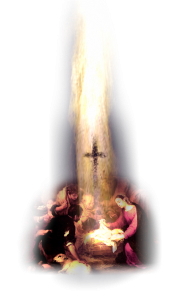
REASON 4
WHY GOD BECAME MAN

The Fullness of God
Revealed in a Man
“For God was pleased
to have all His fullness dwell in Him,
and through Him to reconcile to Himself all things,
whether things on earth
or things in heaven,
by making peace through His blood, shed on the cross.”
(Colossians 1:19-20)
The Temple in the Old Testament
The book of Colossians establishes an essential principle: living in the fullness of God. Paul emphasizes that true mystery, wisdom, and knowledge are found only in Christ. The verse clearly states, “God was pleased to have all His fullness dwell in Him” which can be interpreted as, “God is satisfied to have all His fullness dwelling in Christ”. It is in accordance with the will of God that His glory dwells perfectly in Christ. He is the fulfillment of what the Bible teaches about the temple. The temple was understood to be the place where God’s presence dwelt; thus this is the center where the Israelites place their hope for joy of worship.

Only in the temple
could God’s people
enjoy the fountain of life.
The temple is intrinsically connected to the story of Israel’s history. It paints a vivid picture of the time God’s people lived in temporary shelters in the wilderness after God brought them out of Egypt. Every element is meant to draw the Israelites back to the Eden narrative. Garden of Eden served as the first true temple. It was where God met and communed with the first humans, Adam and Eve, until they were banished from God’s presence. However, temples do not have a very positive connotation in the 21st Century.
Throughout history, the yearning for returning to Eden has manifested itself in many ways. In his classic sermon, Tim Keller elucidates on this point, that the world of literature is full of essays and stories with the theme of returning to Eden. We too have a desire to return to our original state of being, and this desire manifests itself in our life choices. It is the reason why we feel the need to have a better quality of life. No one has a perfect life, and we all want a better life. This desire was derived from our unconscious model of the lost Paradise.
In the Pursuit of Happiness
The Western societies were most influenced by ancient Greek Philosophers. Socrates and Plato are the most influential Greek Philosophers who believed that there are two worlds in this life: a material world and a logical world. The material world is the lower one, as it is constantly changing, whereas the logical world is ideal and eternal based on ideas. Aristotle’s approach was also very persuasive, as it is frequently credited as the basis for study of logic and ethics. He believed that all men have the potential for virtue and character excellence. The closer we get to perfection the better; hence imperfection is often seen as failure. For the ancient Greeks, happiness was a virtue. A happy life must be a virtuous life. Therefore, happiness was something you had to work hard at.
At the bottom of our heart
lies the concept of values
and an image
of what an ideal life should be,
but nobody knows what it’s like.
Surely, the desire for fullness of life and longevity is built into all of us. Everywhere we look, we are bombarded by advice on how to achieve perfection. Endless self-help books and blogs claim that they have the secret for helping us achieve a happy marriage or land a perfect job. We are forcibly reminded that we should attain happiness at all costs.
What Does the Bible Say?
The Bible implies that happiness is possible! This is staggering news. God promises us happiness as a gift, not a reward. Happiness is not something we can achieve by striving for it alone, nor by focusing on it as a goal. Notice that God did not say to the Israelites, “When you enter the land of Canaan, you must fight to get it.” Instead, God said to them, “When you come into the land of Canaan, which I give you for a possession…” Obviously, God was determined for the Israelites to occupy the Promised Land, thus they were commanded to clear the land of wickedness. Do you see the pattern here? This pattern should permeate our lives and our thinking today.
Christians do not struggle
to obtain happiness.
Salvation and happiness are gifts of God; they are not a reward for our labors. Happiness is given by God because we belong entirely to God. Whoever belongs to God hears and obeys His voice (John 8:47). All we have to do is accept His gift because it is God’s will to give it to us. This is the way of thinking that all Christians should grasp. Unfortunately, too many Christians assume that success and happiness are intrinsically linked – that one must be achieved before the other. “Life is hard, you must work hard to succeed!” This popular line is nothing more than a platitude. How many of us think that the only way we get happiness is to spend all our energy and all our time to change our circumstances and situation? All too often, we set standards to apply to ourselves and ask God to follow through with them.
Simply put, happiness doesn’t depend on the whims of circumstances or the proper function of the world. The kind of happiness God is promising is counter-intuitive to our modern minds. In Psalms 103, the psalmist helpfully reminds us of how gracious God is. Above anything else, let us summon our souls to bless the Lord, forget not all His benefits, and hold fast to a specific truth about the Lord. It is no doubt that as a Christian, our source of happiness is to remember the goodness of God.
Can We Find Happiness in Our World?
Ever since the fall of man, life has been difficult, and this often makes it hard to be happy. One might insist that perfect happiness is only possible in the afterlife. The Bible teaches that happiness is a gift of God. However, who could be happy living in such a world as ours? Do we get the foretaste of the complete happiness of Heaven as long as we live in a broken world marred by sin? The answer is yes and no. We should not wait until we die to discover a taste of that. God wants us to experience immense joy and freedom as we navigate in a sinful and fallen world. All happiness is the enjoyment of God in one way or another. The supreme happiness of the Christians in Heaven will be that at last we will enjoy God fully.
What makes Heaven a wonderful place
is that is where God is.
If we can’t enjoy God here,
we will not enjoy God later.
Unfortunately, as Christians, we often look for happiness in all the wrong places. Happiness seems to be all about feelings, a sense of contentment, or an overall well-being. It is impossible, however, for any created good to constitute man’s happiness. Happiness can only be found in God, the true fount of happiness. God is the truly happy One, and His foremost will for us is to embrace His perfect loving-kindness as we await His work in bringing this world into perfection. Our happiness in Christ is something that we can enjoy here and now.
Complete in Christ
For centuries, God allowed His presence to remain in the temple during the Old Covenant period. He filled the tent that the Israelites used for worship while in the wilderness, yet He was by no means imprisoned there. The Biblical theme of God’s presence finally finds its fulfillment in Jesus. God no longer dwells in the temple made with hands. In the book of Colossians, Paul wrote a profound understanding that the Lord is not limited to one place – he explained that God filled the earth with His fullness by becoming man. The coming of Christ in the flesh was, in essence, God coming to dwell with human beings.
Jesus is the living presence of God,
and He, bodily,
is the fullness of everything we seek.
It is considered heresy, though, to believe that Jesus is a mere human who was filled with God and therefore He became God. Jesus is the most-high God himself, and there was never a time when He became God, for God is eternal. This eternal God became man through incarnation. That is the great event we celebrate at Christmas. It is helpful to be aware of the false views concerning Christ. In Christ all the fullness of the deity lives in bodily form.
Because of our faith, we have come into completion in Christ. As believers, therefore, we have been made full. We are now identified with Him and one with Him. We are joined to the One in whom all the fullness of the Godhead dwells. Therefore, we lack nothing, and we should no longer remain in our feelings, nor in our assessment of ourselves, but we should exercise our spirit to partake of all that Christ is and has.
In Christ,
we are made perfect and complete,
and in Him we do not lack anything.
Christ came to be the embodiment of the fullness of the Godhead, and in Him all the fullness was pleased to dwell. The fullness of God is not some kind of abstract concept we attain in the afterlife. It is the life of Christ on Earth. As believers in Christ, we are called to live out the fullness we already have in Him as we follow His chosen path for our lives. Fullness has been given to us. We have been given all we need to be what God created us to be and to do what God calls us to do. It is in Jesus Christ that we receive the fullness of God’s gift of happiness, in whom all the blessings of God flow into our life for eternity.
The Theology of the Body
It is important to understand the apostle Paul’s perspective on Christ as the “Perfect Man,” who brought forth life in His flesh. The Father’s delight was upon Him. Christ is the image of the invisible God who is Himself the Perfect Man. Or to put it more clearly, the body and only the body makes the invisible visible. The Son of God has taken an actual body, and His body has been nailed to the cross.
In becoming fully human,
Jesus redeemed humanity.
Jesus lived a human life
and died a human death.
The self-sacrificing power of God enacts and reflects His divine righteousness. God Himself is revealed as the offering. Paul explains how God’s giving up his Son to death in self-sacrifice is God’s righteous way to disable sin and death. Our ideas of God can never fully contain God, and therefore there will always be more to God than we can understand. God is not only sufficient, good, trustworthy, loving, and holy, but He is also self-sacrificing. For by one sacrifice, He has made perfect forever those who are being made holy (Hebrew 10:14).
Paul’s Epistle to the Romans identifies God’s self-sacrifice through Christ and the reciprocal response expected of humans. Paul, therefore, appeals to the church in Romans: “Present your bodies as living sacrifice, holy and acceptable to God.”
The body is given to us
to make the glory of God more visible,
it shows the world the image of God.
What is significant in the work of redemption is the consecration of our bodies to the living God. Notice, how different Christianity is from the tendency of the Greeks – it depreciates the body and emphasizes only the soul.
In view of all that God has done for us,
it is only reasonable and logical
to use our bodies to do His will
and to accomplish His purposes.
God gave us His Word and sent His Spirit to guide us into all truth so we could know how to live and present our body as a living sacrifice.
When we look at our culture today, people use the words “God’s presence” a lot. In some ways, our culture has grabbed a hold of this notion of God’s presence, thinking that the signs of having the fullness of God and His presence are when we are able to do miraculous works or heal diseases. Sadly, only a few people enjoy the fullness of God in life as God intends.
Present Your Bodies as a Living Sacrifice to God
What does it actually mean to present our body as a living sacrifice? In the most literal sense, it is in a marriage. Paul makes an incredible claim about marriage. There are often pictures in Scripture that depict spiritual truth. Marriage is a perfect picture and a testimony of Christ who gave Himself for the Church. Marriage is a picture of the Gospel. Paul teaches that “The wife’s body does not belong to her alone, but also to her husband. In the same way, the husband’s body does not belong to him alone but also to his wife” (1 Corinthians 7:4).
Marriage requires
great sacrifice and dedication,
even when those acts of dedication
might be temporarily painful.
Contrary to the Gospel narrative of Christian marriage, our contemporary culture believes that setting clear boundaries is the best solution for happy relationship, namely marriage. The world we live in is caught up with a sense of entitlement. More often, we think of what benefits we can gain from our relationships, not what we can sacrifice for them. We are obsessed with our rights and are so selfish, thinking only how others can serve our interests. We don’t want to serve each other; we only want to be served.
A selfish, self-conceited person
breeds unhappiness.
The Lord Jesus set up a model for our God-man living. Christ came not to be served, but to serve. He presented His body to God as acceptable sacrifice. We are called to follow Him, and now the time has come for us to present our bodies as living sacrifice. In regards to God’s holiness, faithfulness, love, and truth, we are to treat one another as if they’re more important than we are, bringing good and joy to others. This is why the way we relate to one another is radically different than the way the world relates to one another.
God the Father, Son, and Spirit
live to honor, to glorify,
and to exalt one another.
We should do the same
within the body of Christ.
As we celebrate the birth of Christ at Christmas, it is important that we believe in Jesus as the fullness of God is wonderfully revealed. God has shown us love through Jesus Christ. While sacrificial love may often difficult, God will guide us in how we can best love others and help us to love as Jesus loved: sacrificially. A true understanding of Christmas is the source of our eternal happiness.
